Cambridge EnerTech’s

Energy Storage for Data Centers

Resilient, Intelligent & Sustainable Energy Storage for the AI Era

March 16 - 17, 2027 ALL TIMES EDT


The incredible growth of AI is transforming the role of battery energy storage from a backup power solution into a strategic asset for modern data centers. As AI workloads drive unprecedented power demand, operators are deploying advanced Battery Energy Storage Systems (BESS) to enhance grid resilience, support renewable energy integration, reduce energy costs, improve power quality, and ensure uninterrupted operation of mission-critical infrastructure. At the same time, new battery chemistries, intelligent battery management systems, and evolving safety standards are redefining how energy storage is designed, deployed, and managed across hyperscale, colocation, and enterprise facilities. The Battery Energy Storage for Data Centers track brings together data center operators, battery manufacturers, technology providers, system integrators, EPCs, and industry leaders to explore the latest innovations in large-scale energy storage for AI infrastructure. Through expert keynotes, case studies, and technical discussions, attendees will examine advances in battery technologies, energy storage integration, UPS evolution, grid-interactive operations, thermal management, safety, lifecycle management, and next-generation power architectures. Discover how battery energy storage is becoming a cornerstone of resilient, efficient, and sustainable AI-ready data centers.




Preliminary Agenda

Session Block

ENERGY STORAGE INTEGRATION, GRID PERFORMANCE, AND DATA CENTER ECONOMICS

Systems Innovation for Cloud and AI Infrastructure

Husam Alissa, Senior Director - Systems Technology, Microsoft , Senior Director - Systems Technology , Microsoft

From Backup Power to Strategic Asset: The New Role of Energy Storage in AI Data Center Development

Photo of Mona Dajani, Partner & Global Chair of Infrastructure, Infrastructure Energy & Real Estate Grp, Cooley LLP , Partner & Global Chair of Infrastructure , Infrastructure Energy & Real Estate Grp , Cooley LLP
Mona Dajani, Partner & Global Chair of Infrastructure, Infrastructure Energy & Real Estate Grp, Cooley LLP , Partner & Global Chair of Infrastructure , Infrastructure Energy & Real Estate Grp , Cooley LLP

As AI drives unprecedented demand for data center power, energy storage is evolving from a backup technology into a core component of project development and investment strategy. This session will examine how batteries, microgrids and behind-the-meter storage are reshaping data center site selection, power procurement, project finance, contracting, and M&A. Attendees will gain a framework for evaluating storage as both critical infrastructure and a strategic asset.

Batteries for Data Centers and Grid vs. EVs: Inverted Hockey Sticks?

Photo of David Steven Jacoby, Managing Director, Energy Consulting, Boston Strategies International , Chairman , Energy Consulting , Boston Strategies International
David Steven Jacoby, Managing Director, Energy Consulting, Boston Strategies International , Chairman , Energy Consulting , Boston Strategies International

This presentation peels away the layers of batteries for data centers, and identifies which segments of the data center market, which battery types and which suppliers will lead and which will lag. Based on the likely trajectory of renewable power, data center construction, and EV production, and considering politics and productivity, it offers viable strategies for battery OEMs and service providers to data centers.

From Grid to Chip: Measuring What Matters for Data Center Efficiency and ROI

Photo of Bob Zollo, Solution Architect for Battery Testing, Keysight Technologies , Solution Architect R&D , Battery Testing & Automotive & Energy Solutions , Keysight Technologies
Bob Zollo, Solution Architect for Battery Testing, Keysight Technologies , Solution Architect R&D , Battery Testing & Automotive & Energy Solutions , Keysight Technologies

The massive power consumption of AI data centers demands rigorous efficiency tracking for sustainability and ROI. To optimize energy use, we must understand efficiency of AC/DC conversion to point-of-load regulation. This session examines power architectures—including 800 Vdc systems that reduce losses— and how to measure them. Static efficiency alone is insufficient; accurate characterization requires evaluating performance under steady state conditions, during dynamic events dynamic events such as load transients and startup sequences, and across varying workloads and temperatures.

The Blueprint for Successful Public Consultation for Building AI Data Centers

Photo of Kimberly Berman, Senior Consultant, Avicenne Energy , Senior Consultant - Energy Transition Metals , Pivot Research
Kimberly Berman, Senior Consultant, Avicenne Energy , Senior Consultant - Energy Transition Metals , Pivot Research

The buildout of data centers to support AI growth is highly controversial. They provide limited job growth; require massive amounts of energy and water, taxing regional supplies; and generate noise pollution. In the U.S., they take over prime land to avoid complicated environmental assessments and permitting. Like with lithium-ion battery plants, the community backlash has been intense. This talk will provide a blueprint for companies to successfully navigate public consultation through successful global case studies that can be adapted for many high tech and renewable energy infrastructure projects.

R&D INNOVATIONS IN ENERGY STORAGE FOR AI DATA CENTERS

Beyond the Cell: How Battery Chemistry Shapes AI Data Center Power Architecture

Photo of Brandon Kelly, PhD, Chief Scientist, Peak Energy , Chief Scientist , Peak Energy
Brandon Kelly, PhD, Chief Scientist, Peak Energy , Chief Scientist , Peak Energy

AI data centers require energy storage to do more than provide backup power. This talk explores how choices at the cell level shape system performance, thermal management, safety, reliability, and use of limited grid capacity. Connecting battery chemistry to system architecture, it examines storage across dynamic AI workloads and facility requirements, showing how simplified systems can reduce operating complexity while enabling resilient, efficient power infrastructure.

Engineering and Optimization of Interfaces for Next-Generation Sulfide Solid-State Batteries

Photo of Jiyoon Kim, PhD, Research Scientist, SandboxAQ , Research Scientist , AI Simulation , SandboxAQ
Jiyoon Kim, PhD, Research Scientist, SandboxAQ , Research Scientist , AI Simulation , SandboxAQ

Engineering interfaces remain one of the central challenges in realizing the full potential of all-solid-state batteries. This presentation describes a collaborative approach between SandboxAQ and Solid Power, combining advanced atomistic modeling, machine-learned interatomic potentials, and materials design to engineer chemically stable, ionically-conductive interfaces/interphases. We present AQVolt26 as a foundation for accelerating interface optimization to support commercially ready solid-state electrolyte architectures.

Supercapacitor Technology and Market Outlook for AI Data Centers

Photo of Daniel Parr, Technology Analyst, IDTechEx , Technology Analyst , Analysts , IDTechEx
Daniel Parr, Technology Analyst, IDTechEx , Technology Analyst , Analysts , IDTechEx

IDTechEx forecasts that data centers will represent a market of US$950 million for supercapacitors by 2037, with opportunities for both EDLCs and hybrid capacitors. Growth is tied to AI data centers, which have characteristic power demand profiles, featuring rapid, large-scale power fluctuations that can lead to grid strain and blackouts. This presentation explores the potential for supercapacitors in data centers, covering supercapacitor technologies, applications, players, and supply relationships.

Symmetric High-Power Chemistry Being Deployed in New Data Center UPS and Rack-level (BBU and Sidecar) Solutions.

Photo of Tyler Andrews, Vice President, Echion Technologies Ltd. , VP Business Development , Commercial , Echion Technologies Ltd
Tyler Andrews, Vice President, Echion Technologies Ltd. , VP Business Development , Commercial , Echion Technologies Ltd

AI training & inference clusters impose a power profile unlike any prior data-center load: synchronized GPUs drive megawatt-scale swings within milliseconds, stressing both upstream grid infrastructure and the ESS systems meant to protect the IT load. Conventional energy storage, optimized for rare, one-directional backup events, is poorly matched to the continuous, symmetric, high-rate charge and discharge these loads demand. Echion’s XNO® niobium-anode cells are being deployed into UPS and rack-level (BBU/sidecar) energy-storage systems to address this. This XNO® battery technology delivers symmetric high-C-rate operation, ultra-long cycle life, and high safety, enabling a solution that not only rides through outages but actively buffers AI load volatility and supports grid-facing services. Because Echion offers multiple high-power cell formats that can be easily integrated into existing OEM designs, it offers a de-risked, near-term path to deployment for UPS OEMs and hyperscale operators.

Fire-Safe Zinc Aqueous Chemistry for Data Center Backup Power

Photo of Gabriel Cowles, CEO, Urban Electric Power , Chief Executive Officer , Urban Electric Power
Gabriel Cowles, CEO, Urban Electric Power , Chief Executive Officer , Urban Electric Power

Data center backup power remains dominated by lead-acid, largely because lithium's thermal runaway risk imposes siting, spacing, and fire-protection costs inside the building. Urban Electric Power's rechargeable aqueous zinc chemistry is UL 1973 listed, and UL 9540A testing found no thermal runaway initiated by any method. This session presents the resulting safety and ventilation design basis, and integration experience from multiple MWh systems built using commercially available power conversion equipment.

Preparing for the AI Power Era: Next-Generation Battery Technologies in Asia for AIDC and HVDC

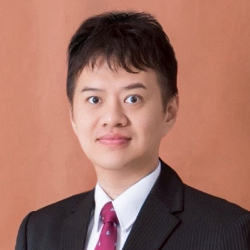
Photo of Mark Lu, PhD, Senior Industrial Analyst, Industrial Economics & Knowledge Center, Industrial Technology Research Institute , Sr Industrial Analyst , Industrial Economics & Knowledge Ctr , Industrial Technology Research Institute
Mark Lu, PhD, Senior Industrial Analyst, Industrial Economics & Knowledge Center, Industrial Technology Research Institute , Sr Industrial Analyst , Industrial Economics & Knowledge Ctr , Industrial Technology Research Institute

AI data centers are transforming power architecture, driving demand for higher-voltage DC systems, faster transient response, and greater energy resilience. This presentation examines how Asia’s battery industry is preparing for the emerging AIDC and HVDC landscape, covering high-power lithium-ion, sodium-ion, battery backup units, UPS, and grid-scale energy storage. It highlights technology trends, system requirements, and strategic implications for next-generation data center power infrastructure.

DATA CENTER MARKET OUTLOOK

The Evolution of Capital Markets and the Data Center Industry

Photo of Alexandra Manoloff, Head of Battery Coverage for North America, Barclays Investment Bank, Energy Transition Group , Head of Battery Coverage for North America , Energy Transition Group , Barclays Investment Bank
Alexandra Manoloff, Head of Battery Coverage for North America, Barclays Investment Bank, Energy Transition Group , Head of Battery Coverage for North America , Energy Transition Group , Barclays Investment Bank

As the data center landscape continues to evolve, power – outside and within – has become ever-critical. And batteries are at the foundation of this – for every duration, ranging from pulsing to backup power and energy storage. As we settle into a new normal around the building, power procurement and operations of data centers in a world with hyperscalers, the lines between white space and gray space have become blurry, and the need for and premium placed on innovation for power has become exponentially important. The finance world is very focused on this as well, and capital markets surrounding the data center industry continue to evolve.


For more details on the conference, please contact:

Craig Wohlers

General Manager

Cambridge EnerTech

Phone: (+1) 617-513-7576

Email: cwohlers@cambridgeenertech.com


For sponsorship information, please contact:


Companies A-K

Sherry Johnson

Lead Business Development Manager

Cambridge EnerTech

Phone: (+1) 781-972-1359

Email: sjohnson@cambridgeenertech.com


Companies L-Z

Rod Eymael

Senior Business Development Manager

Cambridge EnerTech

Phone: (+1) 781-247-6286

Email: reymael@cambridgeenertech.com


Energy Storage for Data Centers