Cambridge EnerTech’s

Data Center Power Conversion, Thermal Management and Safety

Enabling Reliable, Efficient & Safe AI Data Centers at Scale

March 17 - 18, 2027 ALL TIMES EDT


As AI workloads continue to push data centers beyond traditional design limits, power delivery, thermal management, and operational safety have become critical enablers of next-generation AI infrastructure. High-density GPU clusters and hyperscale facilities are driving unprecedented rack power densities, requiring innovative approaches to power conversion, cooling technologies, electrical distribution, and system reliability. The Data Center Power Conversion, Thermal Management and Safety track brings together data center operators, hyperscalers, power electronics manufacturers, cooling technology providers, utilities, equipment suppliers, and industry experts to explore the technologies shaping the future of AI-ready infrastructure. Through expert keynotes, technical presentations, and real-world case studies, attendees will examine advances in power electronics, electrical architectures, liquid and immersion cooling, thermal optimization, fire protection, monitoring systems, and resilient facility design. Discover how next-generation power and cooling technologies are enabling higher compute density, greater energy efficiency, enhanced safety, and reliable operation for the world's most demanding AI applications.


Preliminary Agenda

Session Block

ADVANCED POWER CONVERSION FOR AI DATA CENTERS

Beyond PUE: Maximizing Power & Capacity Efficiency for the AI Data Center

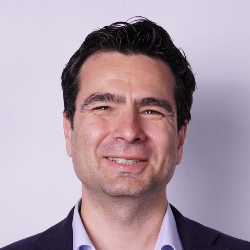
Photo of Yasar Ayhan Kaya, Senior Director- Technical Program Management, Azure Datacenter Capacity, Power & Efficiency, Microsoft , Sr Director, Datacenter Capacity, Power & Efficiency , Azure Datacenter Capacity, Power & Efficiency , Microsoft
Yasar Ayhan Kaya, Senior Director- Technical Program Management, Azure Datacenter Capacity, Power & Efficiency, Microsoft , Sr Director, Datacenter Capacity, Power & Efficiency , Azure Datacenter Capacity, Power & Efficiency , Microsoft

PUE measures the overhead between the utility meter and the rack. The larger losses sit below the IT load, in power built but never converted into compute: unallocated capacity, allocated power never drawn because workloads are provisioned to peak and run at average, and redundancy sized above the SLA the workload needs. Training and inference produce these wastes differently. This keynote covers the levers the industry uses to recover each one, from pooled buffers and oversubscription to redundancy matched against the SLA actually required, how far recovery can go, and the underutilization that remains after every lever is applied.

High-Frequency Power Conversion for AI Data Centers: Balancing GaN, Magnetics, EMI, Efficiency, and Power Density

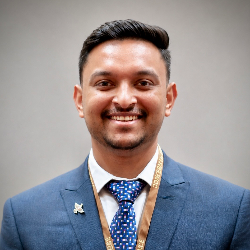
Photo of Parth Narendrakumar Rathod, High Voltage Electrical Engineer—R&D, XP Power , High Voltage Electrical Engineer - R&D , High Voltage Low Power R&D , XP Power
Parth Narendrakumar Rathod, High Voltage Electrical Engineer—R&D, XP Power , High Voltage Electrical Engineer - R&D , High Voltage Low Power R&D , XP Power

AI data centers are pushing power-conversion systems toward higher switching frequencies, higher power density, and tighter efficiency targets. This presentation examines the system-level tradeoffs of GaN-based high-frequency conversion, including semiconductor losses, magnetics, parasitic effects, EMI/EMC, thermal behavior, and reliability. Rather than focusing on device specifications alone, it shows how switching frequency and converter architecture must be co-optimized with magnetics and electromagnetic performance to achieve meaningful system-level gains.

Megawatt Solid-State Transformers for AI Data Centers: Enabling Onsite Generation, Storage, and AI-Enabled Intelligent Energy Management

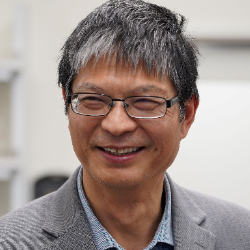
Photo of Chris Mi, PhD, Fellow, IEEE & SAE; Distinguished Professor, San Diego State University , Distinguished Professor and CTO , Electrical & Computer Engineering , San Diego State University & Novos Power Inc.
Chris Mi, PhD, Fellow, IEEE & SAE; Distinguished Professor, San Diego State University , Distinguished Professor and CTO , Electrical & Computer Engineering , San Diego State University & Novos Power Inc.

AI data centers are projected to consume hundreds of terawatt-hours annually, demanding power conversion technologies that are not only energy-efficient but also cost-effective, scalable, and reliable. To support the rapid growth of AI workloads, innovative power electronics solutions are urgently needed. This presentation explores the development of a novel megawatt-scale, medium-voltage (MV) power conversion system based on a split-air-gap solid-state transformer architecture. The approach aims to reduce energy loss, footprint, and cost while enabling flexible, modular deployment and achieving more reliable operation.

INNOVATIONS IN WATER MANAGEMENT

Beyond Water Efficiency: Building Water-Positive AI Data Center Communities 

Rishab Vardhan Harikrishnan, Principal Hardware Manager, Oracle , Principal Hardware Manager , Oracle

Water is the Missing Infrastructure Layer for AI Data Centers

Photo of Corydon Coppola, President, OurWaters & OurSoils (OWOS) , President , Executive Leadership , OurWaters & OurSoils (OWOS)
Corydon Coppola, President, OurWaters & OurSoils (OWOS) , President , Executive Leadership , OurWaters & OurSoils (OWOS)

AI data centers are scaling faster than the water systems that support them. This presentation examines water as a critical infrastructure layer connecting cooling demand, municipal supply, reclaimed water, stormwater, wastewater, recharge, and watershed conditions. Attendees will learn how earlier water planning can reduce project risk, expand reuse and repurposing options, improve community acceptance, and create measurable local water benefits. The session also explores how monitoring and AI-enabled decision support can improve treatment, allocation, reuse, recharge, and long-term watershed performance.

THERMAL MANAGEMENT & DC INFRASTRUCTURE

From Megawatts to Molecules: Reinventing Data Centers through Physics

Photo of Scott Charter, Head of Data Center GTM, Physical Superintelligence , Head of Data Center GTM , Physical Superintelligence
Scott Charter, Head of Data Center GTM, Physical Superintelligence , Head of Data Center GTM , Physical Superintelligence

Every data center is a physics problem in disguise. Power, heat, water, and space compete for the same margin, settled by spreadsheets and intuition. Scott Charter, Head of GTM – Data Centers at Physical Superintelligence (PSI), shows how AI "virtual physicists" are rethinking infrastructure from the molecule up, on Earth and in orbit, by using PSI's Emmy engine to reason across these interconnected design challenges, proving the math before capital is committed.

From 100 kW to 1 MW: How AI Rack Density Changes Data Center Electrical Design

Photo of Venkatesh Thumala Janakiraman, Assoc Principal, Compute Electrical, Lamar Johnson Collaborative , Associate Principal , Compute Electrical , Lamar Johnson Collaborative
Venkatesh Thumala Janakiraman, Assoc Principal, Compute Electrical, Lamar Johnson Collaborative , Associate Principal , Compute Electrical , Lamar Johnson Collaborative

AI rack densities are rapidly moving beyond 100 kW, with emerging systems approaching MW-scale loads. At these densities, simply scaling conventional data center electrical infrastructure creates new challenges in power distribution, redundancy, protection, power conversion, and maintainability. This presentation examines how electrical design assumptions change as rack density increases from 100 kW toward 1 MW and identifies the architectural decisions engineers must reconsider for the next generation of AI infrastructure.

Site Selection for the AI Data Center Era

Photo of Moises Levy, PhD, CEO, DCMETRIX , CEO, Data Center SME , DCMETRIX
Moises Levy, PhD, CEO, DCMETRIX , CEO, Data Center SME , DCMETRIX

AI is reshaping data center design, where site selection has become a strategic differentiator. As HPC, AI, and GenAI compute-intensive workloads surge, operators are racing to develop facilities capable of supporting unprecedented rack-power density, energy consumption, and advanced cooling requirements. The market is seeing rapid growth in AI-dedicated data centers, from MW to GW-scale campuses across hyperscalers, co-location providers, and emerging neoclouds. We examine the evolving criteria that matter most—including power availability, sustainability, and proximity to energy and telecom ecosystems—and emphasize how disciplined due diligence and cross-functional alignment enable faster, more effective decisions in an increasingly competitive landscape.

ADVANCES IN DATA CENTER INTEGRATION AND SUSTAINABILITY

Panel Moderator:

PANEL DISCUSSION:
Engineering the AI Data Center: Power, Cooling & Infrastructure for Extreme Density

Roger Strukhoff, Editor-n-Chief, International Data Center Authority (IDCA) , Chief Research Officer , IDCA

Panelists:

MJ Ayyampudur, Senior Mechanical Engineer, Amazon Web Services , Senior Mechanical Engineer , Amazon Web Services

The AI Data Center Infrastructure Equation: Power, Cooling, Land, Water & Delivery 

Ehab Amin, Founder & CEO, Cloudology Inc , Founder & CEO , Cloudology Inc


For more details on the conference, please contact:

Craig Wohlers

General Manager

Cambridge EnerTech

Phone: (+1) 617-513-7576

Email: cwohlers@cambridgeenertech.com


For sponsorship information, please contact:


Companies A-K

Sherry Johnson

Lead Business Development Manager

Cambridge EnerTech

Phone: (+1) 781-972-1359

Email: sjohnson@cambridgeenertech.com


Companies L-Z

Rod Eymael

Senior Business Development Manager

Cambridge EnerTech

Phone: (+1) 781-247-6286

Email: reymael@cambridgeenertech.com


Energy Storage for Data Centers